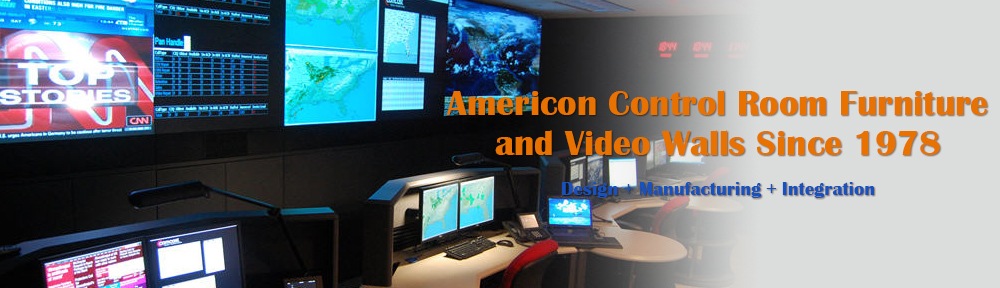
LCD displays are available in both commercial and consumer versions and used individually, or collectively in LCD video wall systems. Commercial grade LCD displays are used in control rooms, command centers, and emergency dispatch because they are simply more dependable and functional than their consumer grade counterparts.
Certainly there’s a place for consumer grade displays in a commercial setting as long as they aren’t used too often, or for extended periods of time. Otherwise, if the demands are so minimal that it makes more sense to replace than repair, a less expensive and less durable consumer display may well do the job assuming the consumer display meets performance requirements. Conversely, critical environments that are too important to fail use only commercial grade displays that are specified as part of an overall control room design plan.
Commercial grade LCD displays cost more than their consumer grade counterparts for a reason. They’re built to last and offer more features. Unlike commercial grade displays, consumer versions aren’t intended for continuous use. For example, consumer grade displays wouldn’t be used in video wall systems that are expected to perform dependably on a 7/24 basis. Consumer grade displays don’t have adequate warranties and service support, sometimes lower resolution, poorer color balance, higher failure rates, and when they fail, they are not easily replaced with a matching model.
In conclusion, selecting the appropriate LCD display depends basically on the application and budget. The primary factors are dependability, performance and price. Paying less for consumer displays may seem like a bargain, but not necessarily a sound investment especially when product failure can negatively impact operations and ends up costing you more in the long term.
There’s more to be said about this if you’re interested. I’m available and look forward to your call.