I can’t speak for what’s happening in other venues, but I haven’t seen a ceiling projector in a control room, or any other critical facility in many years. Possibly, the only exception are smaller emergency operations centers where the budget is limited and the rooms are only used during emergencies and for relatively short duration.
I’ll go through the list of draw-backs to using front projectors in a 7/24 environment, however the difference in purchase price, installation costs and cost of ownership when compared to one or more large LCD panels settles the argument without going any farther. A projector installation requires a projector, mount, roll down screen (usually electric), a hidden screen when not in use, light dimmers, room shades and replacement lamps at one a month on a 24 hour basis. I think you get the picture.
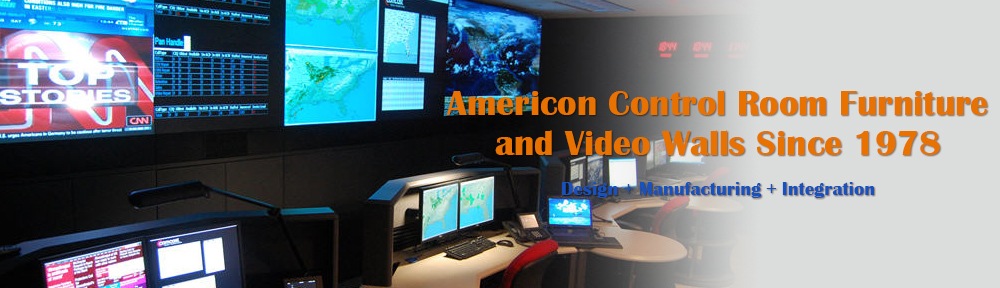
That said, if you’re still considering front projection for your control room because you need a larger screen size and think projection is the only alternative, consider one of the modern video wall systems made up of multiple displays. You can build these video wall systems to fill the space and the brightness, color saturation, resolution, and dependability far exceeds the typical hi-res projector.
Still not convinced? Then let me run down the list of reasons why front projectors are no longer used for intensive-use applications.
- Initial cost for all front projector components and cost of ownership
- Few choices of front projectors that can do the job
- Lower resolution and brightness except for the more expensive projectors
- Lower contrast and color saturation (washed out image) in a lighted room
- High failure rate due to over heating
- Shorter relative life expectancy
- Frequent lamp changes at hundreds of dollars per lamp
- Little or no backup when they fail unless you use multiple projectors that add to overall cost, or have a backup projector when the primary fails
- Noisy, hot-running and no walking in front of the projector and screen
- Expensive preventative maintenance contract and repair or replacement costs
- Impending obsolescence means fewer replacement choices and shortage of repair parts
Instead, I recommend using one or two of the large 80” LCD displays if you don’t want to go the video wall route. This assumes that your operational needs are relatively straight-forward, otherwise you don’t have many sources to display and you don’t switch among displays very often. Otherwise, a modern video wall system is the way to go. If you’d like to discuss what I’ve said, and you’d like a little friendly advice, feel free to contact me.